
Speaking Practice with Native Speakers vs. Other Learners: Which Is Better?
Mark Ericsson / Last updated: October 16, 2026
Both help, in different ways. Native speakers give you authentic pronunciation, natural phrasing and cultural context. Other learners give you a low-pressure space to speak more, make mistakes and build confidence. The learners who progress fastest usually combine the two: relaxed practice with fellow learners, plus regular conversations with native speakers that stretch them.
When you finally feel ready to speak a new language, this question comes up fast. This guide compares both options honestly, so you can decide what to use and when.
Is it better to practice speaking with native speakers or other learners?
It depends on your goal for that session, but most learners benefit from a mix. Native speakers show you how the language really sounds. Other learners give you a safe place to try things out before you carry them into harder conversations. Neither option is "wrong." They simply solve different problems, and if you only ever practice with one group, you leave easy gains on the table.
What are the benefits of speaking with native speakers?
Best for: accuracy, natural pronunciation and real-world listening.
Because the language is their own, native speakers model the rhythm, intonation and idioms that textbooks rarely capture. They also notice when something sounds "off," even when they can't explain the grammar rule behind it.
- Authentic pronunciation. You hear the language as people actually speak it, not a slowed-down classroom version.
- Natural phrasing. They use the word combinations, filler words and expressions that locals really use.
- Cultural context. A native partner can explain the "why" behind what people say.
- Real-world listening. Natural speed and connected speech prepare your ear for travel, work and films.
The trade-off is pressure. Conversations with fluent speakers can move fast, and beginners sometimes freeze. That's normal, and it's why native practice works best alongside gentler sessions.
When I lived in South Korea, a weekly language exchange group with Koreans who wanted to improve their English did more for my Korean than any textbook. I tell that story in our guide to finding language exchange friends.
What are the benefits of practicing with other learners?
Best for: building confidence and getting lots of speaking time.
Other learners give you something native speakers often can't: a judgment-free zone where mistakes are expected. You can pause, repeat, look up a word and try a sentence three different ways without feeling that you're wasting anyone's time.
- More speaking. Lower stakes mean you actually talk more.
- Shared empathy. A partner at a similar level understands your struggles and slows down naturally.
- Working things out together. When one of you doesn't understand, you both rephrase until it clicks.
- Motivation. Study buddies keep each other accountable and turn practice into a habit.
That third point has research behind it. In a 1985 study, Evangeline Varonis and Susan Gass compared conversations between native and non-native speakers and found that two learners negotiate meaning (stop, check and rephrase) more often than a learner talking with a native speaker. According to Michael Long's interaction hypothesis, that kind of negotiation is exactly what helps you learn.
The limitation is clear: another learner can pass on their own mistakes, and neither of you has a native speaker's intuition. Used alone, learner-to-learner practice can plateau. Used for warm-ups and confidence, it's extremely valuable. To prepare, build your first cards from a list like The 100 Most Common French Words with Pronunciation.
Where does each option win?
Think of them as different tools for different jobs:
- Accuracy and authenticity: native speakers.
- Confidence and amount of practice: other learners.
- Motivation and habit: whichever partner you'll actually show up for.
That last point matters more than people admit. The best practice partner is the one you meet regularly. A learner friend you talk to every week beats a native speaker you talk to once a month.
Which is better for beginners?
Best for: anyone who feels nervous about speaking.
For most beginners, patient partners come first, whether that's supportive learners or native speakers who enjoy teaching. Nerves are a real obstacle: in 1986, Elaine Horwitz, Michael Horwitz and Joann Cope described foreign language anxiety as a specific kind of anxiety, rooted partly in the fear of communicating with others and the fear of being judged. Early on, your priority is to get comfortable producing the language and lose the fear of mistakes.
As your level rises, add more native speakers to refine your pronunciation and sound natural. You don't have to wait until you feel "ready." Simply shift the balance over time.
How often should you practice speaking?
Consistency matters more than marathon sessions. Several short conversations a week will take you further than one exhausting two-hour session every other week, because speaking is a skill of your mouth and ear as much as your memory, and it only becomes automatic with frequent use.
Mixing partners makes a steady rhythm easier: a learner friend for a relaxed mid-week chat, a native speaker for a focused weekend session. The more options you have, the fewer excuses get in the way.
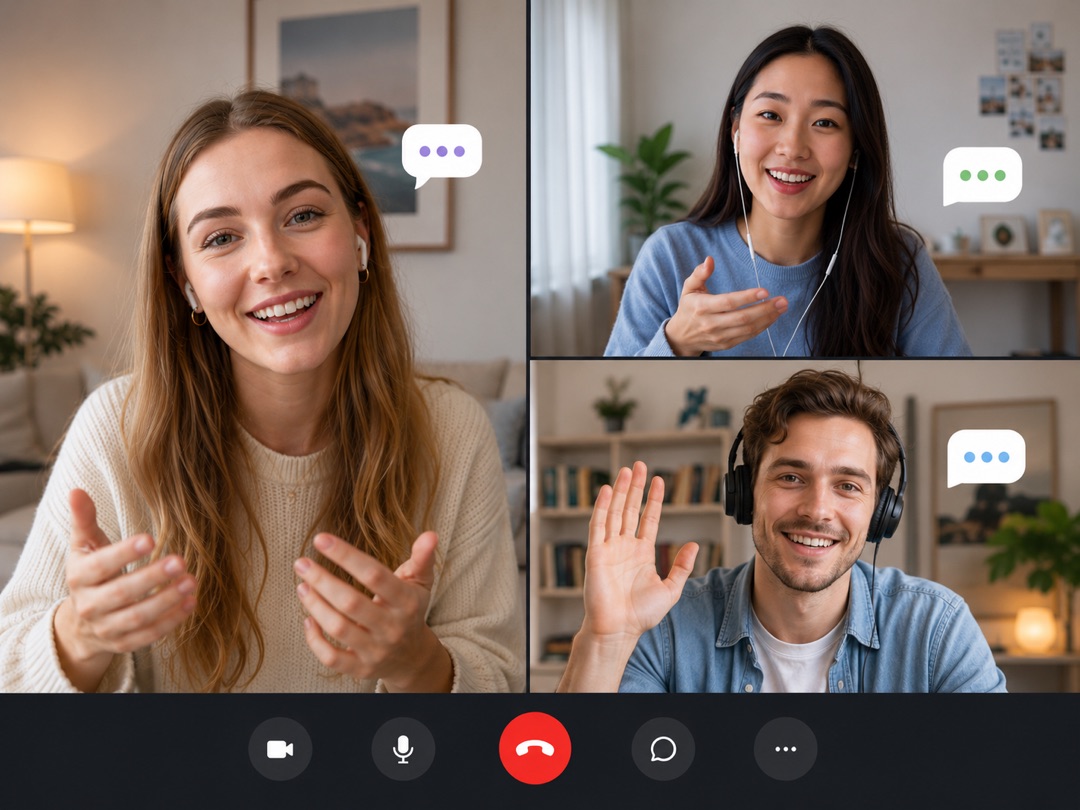
How do you combine native speakers and other learners?
Best for: learners who want a simple weekly routine.
Alternate on purpose instead of choosing one side forever:
- Warm up with a learner. Try new words and structures where mistakes cost nothing.
- Test yourself with a native speaker. Use what you practiced in a real conversation.
- Bring the corrections back. Work on what the native speaker corrected in your next learner session.
- Save the new words. Turn every new word or phrase into a flashcard so it doesn't disappear.
Lingocard makes this mix easy. In our free speaking practice, you can find both native speakers and fellow learners, matched by language, level and shared interests, and talk in text chat or video chat without sharing your phone number. When a new word comes up, save it to the free flashcards app. If you'd like more tips first, our guide on how to find native speakers walks you through the first conversation.
So, which is better: native speakers or other learners?
Both, in the right proportion. Native speakers sharpen your accuracy, pronunciation and cultural understanding. Other learners give you the safe, high-volume practice that builds confidence. Treat it as a deliberate mix:
- Practice often in short sessions.
- Use learners for warm-ups and confidence.
- Use native speakers to stretch yourself.
- Keep the new words you learn.
Whether you want to learn English online or any other language, you'll find partners of both kinds on the Lingocard platform.
Frequently asked questions
Most learners do best with a mix. Native speakers give you authentic pronunciation, natural phrasing and cultural context, while other learners give you a low-pressure space to speak more, make mistakes and build confidence.
Yes. Practicing with other learners lowers the pressure, so you speak more, and research by Varonis and Gass (1985) found that two learners negotiate meaning more often than a learner and a native speaker. Add native speakers regularly so mistakes don't settle in.
Join a language exchange: you help a native speaker with your language, and they help you with theirs. On Lingocard's free speaking practice, you can find native speakers and fellow learners matched by language, level and interests, and talk in text or video chat.
Several short conversations a week work better than one long session every other week. Speaking becomes automatic only with frequent use, so choose a rhythm you can keep up for months.
Start with patient partners, such as other learners or native speakers who enjoy teaching, where mistakes are expected. Short, frequent sessions build confidence, and you can add more native speakers as your level rises.