
Learn Chinese online.
Free Chinese speaking practice.
Build your Chinese vocabulary with smart flashcards and make friends across the globe to practice with.
Chinese for free
How do I learn Chinese online?
To learn Chinese online, start with the words you will actually meet: the 100 most common Chinese words. Lock them in with spaced repetition, which brings each word back just before you forget it, and practice speaking with real people. For English speakers the FSI puts working fluency near 2200 class hours, so daily sessions beat rare long ones.
Why learn Chinese?
Chinese (Mandarin) is the most spoken language in the world by native speakers, with over 900 million. It is a tonal language written in characters rather than an alphabet, and its grammar is remarkably simple - no verb conjugations, genders, or plurals.
In the US Foreign Service Institute ranking, Chinese is a Category IV language - about 2200 class hours to professional working proficiency for English speakers. Chinese forms its own branch - learners commonly study it alongside Japanese or Korean.
The 50 most common Chinese words
Start with the words you will actually meet: learn these and you will recognize something in almost every Chinese sentence.
| # | Word | Pronunciation | Meaning |
|---|---|---|---|
| 1 | 的 | duh | of |
| 2 | 我 | woh | I |
| 3 | 你 | nee | you |
| 4 | 是 | shir | be |
| 5 | 了 | luh | (completed-action particle) |
| 6 | 他 | tah | he |
| 7 | 不 | boo | not (negation) |
| 8 | 在 | dzahy | at |
| 9 | 有 | yoh | have |
| 10 | 这 | juh | this |
| 11 | 个 | guh | (measure word) |
| 12 | 好 | how | good |
| 13 | 就 | jyoh | then, right away |
| 14 | 会 | hway | can (know how to); will |
| 15 | 要 | yow | want (need, will) |
| 16 | 什么 | shen-muh | what |
| 17 | 说 | shwoh | say |
| 18 | 她 | tah | she |
| 19 | 想 | shyahng | would like to; think |
| 20 | 一 | ee | one |
| 21 | 很 | hun | very |
| 22 | 知道 | jir-dow | know |
| 23 | 人 | ren | people |
| 24 | 吗 | mah | (question particle) |
| 25 | 来 | lahy | come |
| 26 | 都 | doh | all |
| 27 | 去 | chyoo | go |
| 28 | 到 | dow | to |
| 29 | 那 | nah | that |
| 30 | 也 | yeh | also |
| 31 | 没有 | may-yoh | not have |
| 32 | 看 | kahn | look |
| 33 | 对 | dway | correct |
| 34 | 能 | nung | can (be able to) |
| 35 | 还 | hahy | still |
| 36 | 把 | bah | (object-fronting particle) |
| 37 | 给 | gay | give |
| 38 | 上 | shahng | on |
| 39 | 和 | huh | and |
| 40 | 让 | rahng | let |
| 41 | 做 | dzwoh | do |
| 42 | 大 | dah | large |
| 43 | 里 | lee | in |
| 44 | 时候 | shir-hoh | time |
| 45 | 自己 | dzih-jee | self |
| 46 | 现在 | shyen-dzahy | now |
| 47 | 怎么 | dzen-muh | how |
| 48 | 可以 | kuh-yee | may, be allowed to |
| 49 | 事 | shir | thing |
| 50 | 点 | dyen | point |
Useful phrases in Chinese
- 你好 · nee HOW · Hello / Good day
- 你好吗? · nee how mah · How are you?
- 谢谢 · SYEH-syeh · Thank you
- 请 · ching · Please
- 我叫... · waw jyaow · My name is...
- ...在哪里? · ...dzai NAH-lee · Where is...?
- 再见 · dzigh-JYEN · Goodbye
- 对不起 · dway-boo-CHEE · Excuse me
- 我不明白 · waw boo ming-BYE · I don't understand
- 你能帮我吗? · nee nung bahng waw mah · Can you help me?
- 多少钱? · dwaw-shaow chyen · How much is it?
- 明天见! · ming-tyen JYEN · See you tomorrow!
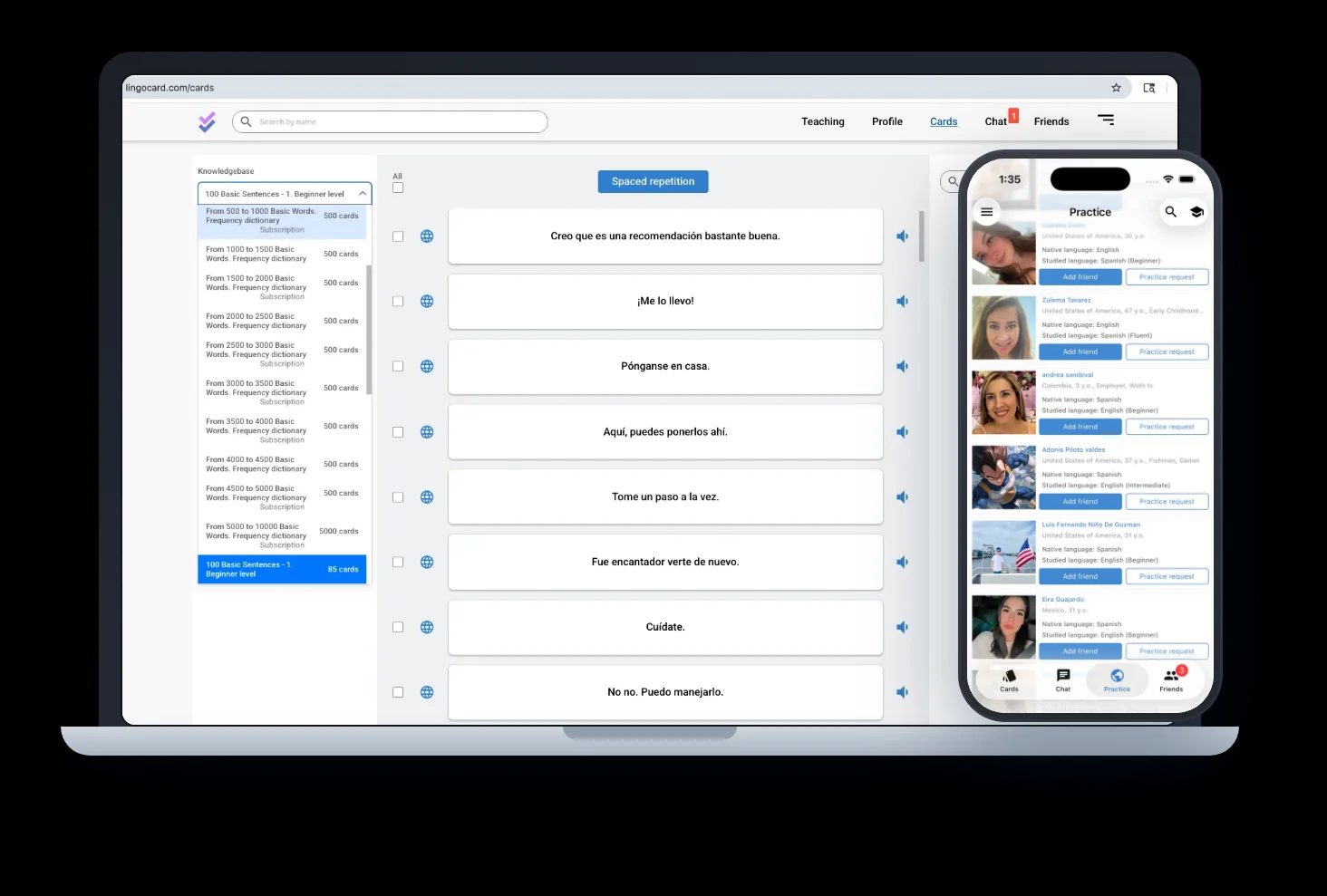
Learn Chinese with comprehensive language resources
- Pronunciation
- Numbers
- Verbs and adjectives
- Frequency dictionaries
- Basic sentences
- Thematic dictionaries
- Politeness
- Idioms
Learn Chinese, wherever you are
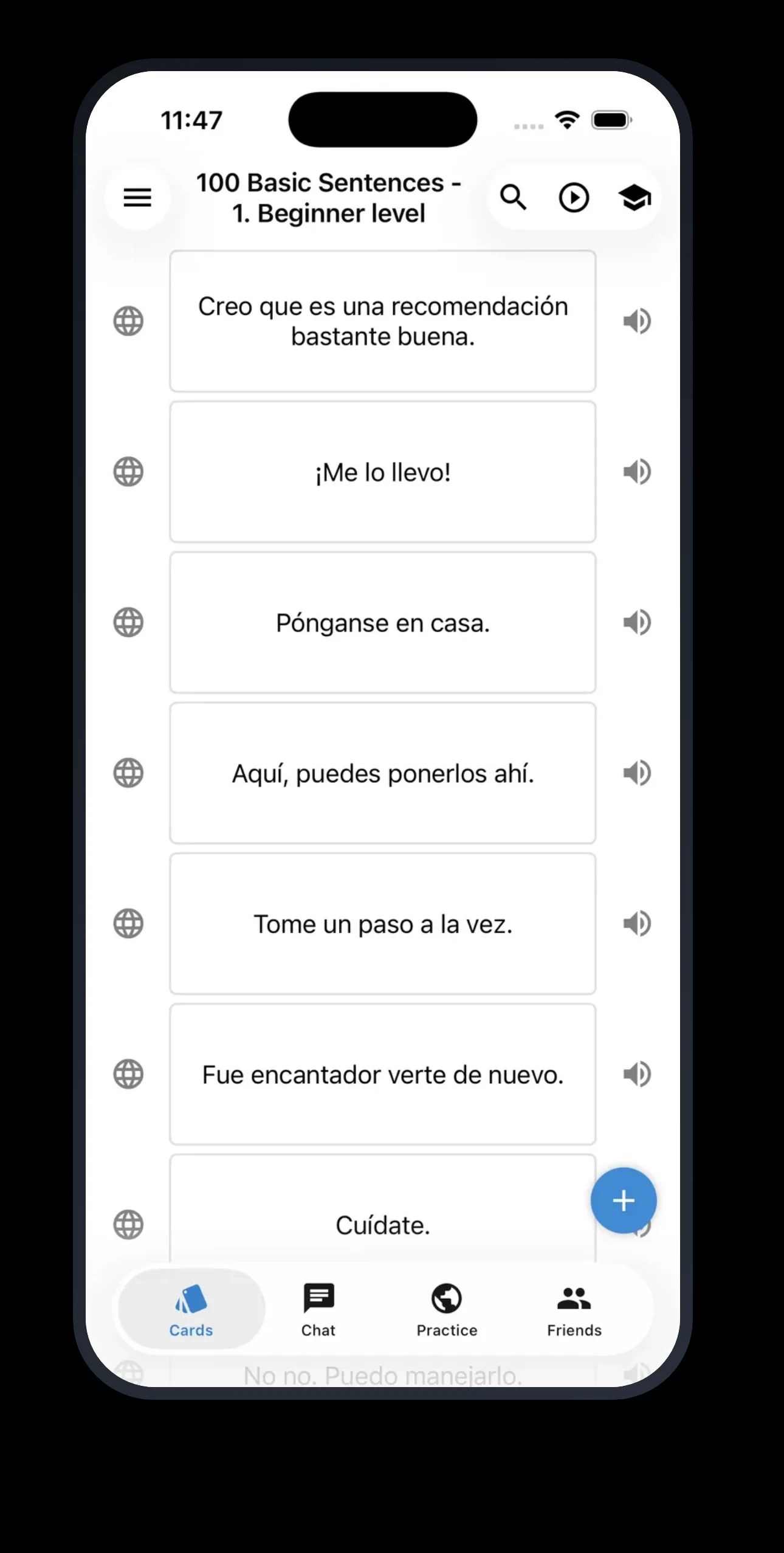
- AI-powered spaced repetition learning system on the go
- Audio processing for pronunciation
- Creation of visual language flash cards with images
- Search for speaking practice partners
- Frequency and thematic dictionaries for any language
- Alert system with exercise reminders
- Live video and messaging to facilitate learning
Join our global Chinese learning community
Collaborate with native Chinese speakers and fellow learners: exchange messages, correct each other's cards, and practice real conversation.
Send friend requests to the speakers you click with and build your own friends list - many practice partners become real friends.









Are you an educator? Teach Chinese online · Create an online Chinese school · Build a Chinese curriculum