
Last updated: June 11, 2026
Free Speaking Practice with Native Speakers and Language Partners
Lingocard's AI search engine matches you with the best speaking partners worldwide - fellow learners and native speakers - then you chat, meet on video, and keep every new word. Free, on web, iOS, and Android.


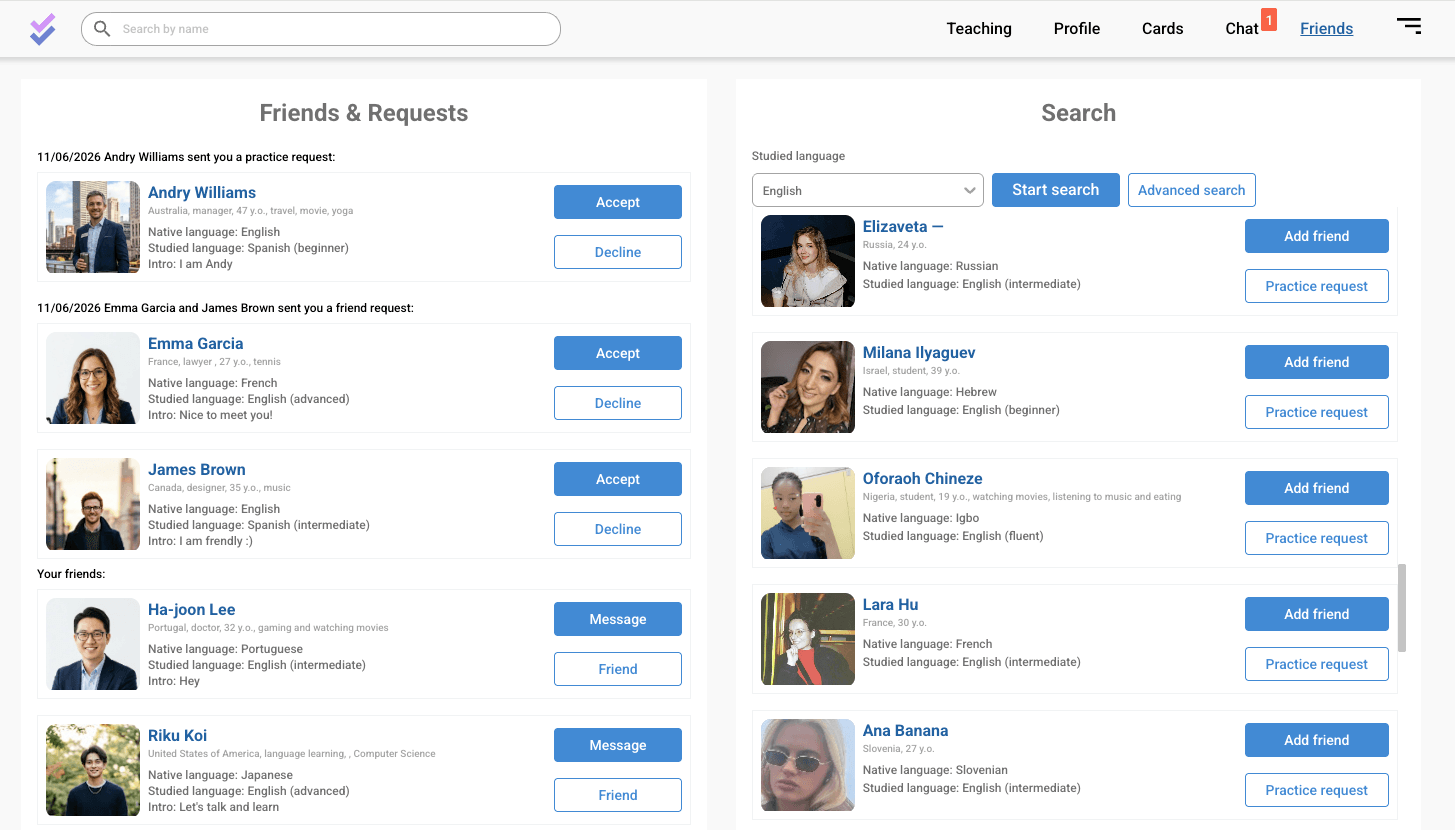
The network
What is Lingocard's speaking practice network?
A global community of language learners and native speakers who practice together through free text and video chat. No hourly fees like tutor marketplaces. Real people, unlike AI chatbots. And you're not limited to natives - practice with learners studying the same language as you, often the easiest way to start speaking.
Vocabulary lists and grammar drills alone don't produce fluency. Fluency comes from active, real-time speaking practice with real people. Lingocard gives you the complete path: find the right partners, start the conversation, practice safely in-platform, and save everything you learn, without paying for lessons or moving to third-party apps.
The search engine
How the free search engine finds your best speaking partners
Finding the right partner is usually the hardest part. Forums and general social media lead to mismatched levels, dead conversations, and timezone conflicts. Lingocard's free AI search engine analyzes profiles across the global community and ranks your best matches on four pillars.
Partners who study the same language as you
Most matches connect you with people from other countries learning the same target language. Because neither of you is native, the pressure disappears. You make mistakes together, build confidence together, and spend 100% of the conversation in the language you're learning.
Native speakers who help you for free
The network is full of native speakers of your target language, many of them learning your native language. Agree on a classic exchange: they help you with theirs, you help them with yours, no money involved. The fastest way to absorb natural pronunciation, slang, and how people actually speak.
A level and schedule that fit yours
Filter by proficiency (beginner, intermediate, advanced, or native) so the conversation moves at a comfortable pace for both of you. Timezone and activity filters help you find partners awake when you are, or online right now and ready to talk.
Shared interests and hobbies
The best practice happens when you forget you're practicing. Profiles include interests (travel, technology, music, films, sport, business), and the engine favors partners you'll genuinely enjoy. No more "where are you from?" small talk.
In-platform
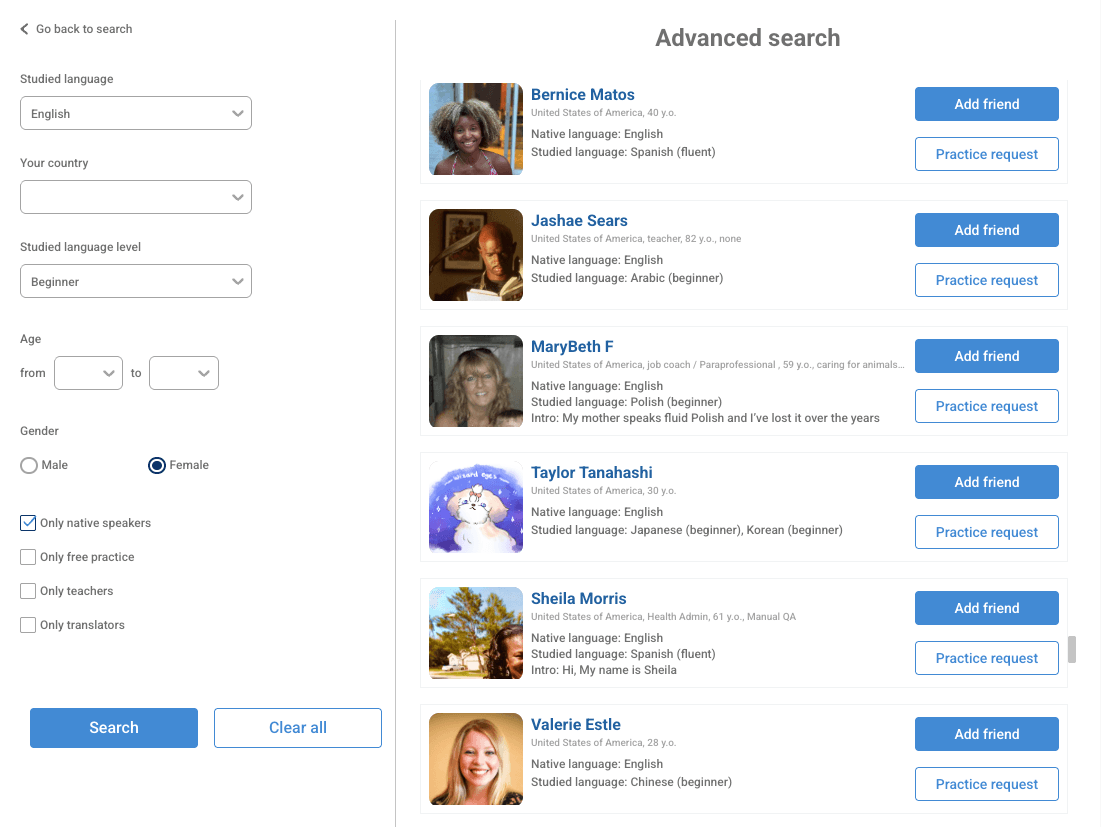
Practice with free text and video chat
Once you find a partner, everything happens inside Lingocard. You never need to share a phone number or move the conversation to WhatsApp or Zoom.
- 1
Start with text chat
For beginners, jumping straight into a live call can be intimidating. The built-in messenger lets you introduce yourself, practice reading and writing, agree on topics, and build rapport at your own pace.
- 2
Move to live video
Facial expressions, gestures, and lip movements are a real part of understanding a language. Video conferencing puts you face-to-face, the closest thing to sitting in a café abroad. Unlimited chat and video are part of the free experience.
Signature feature
Turn every conversation into flashcards you keep
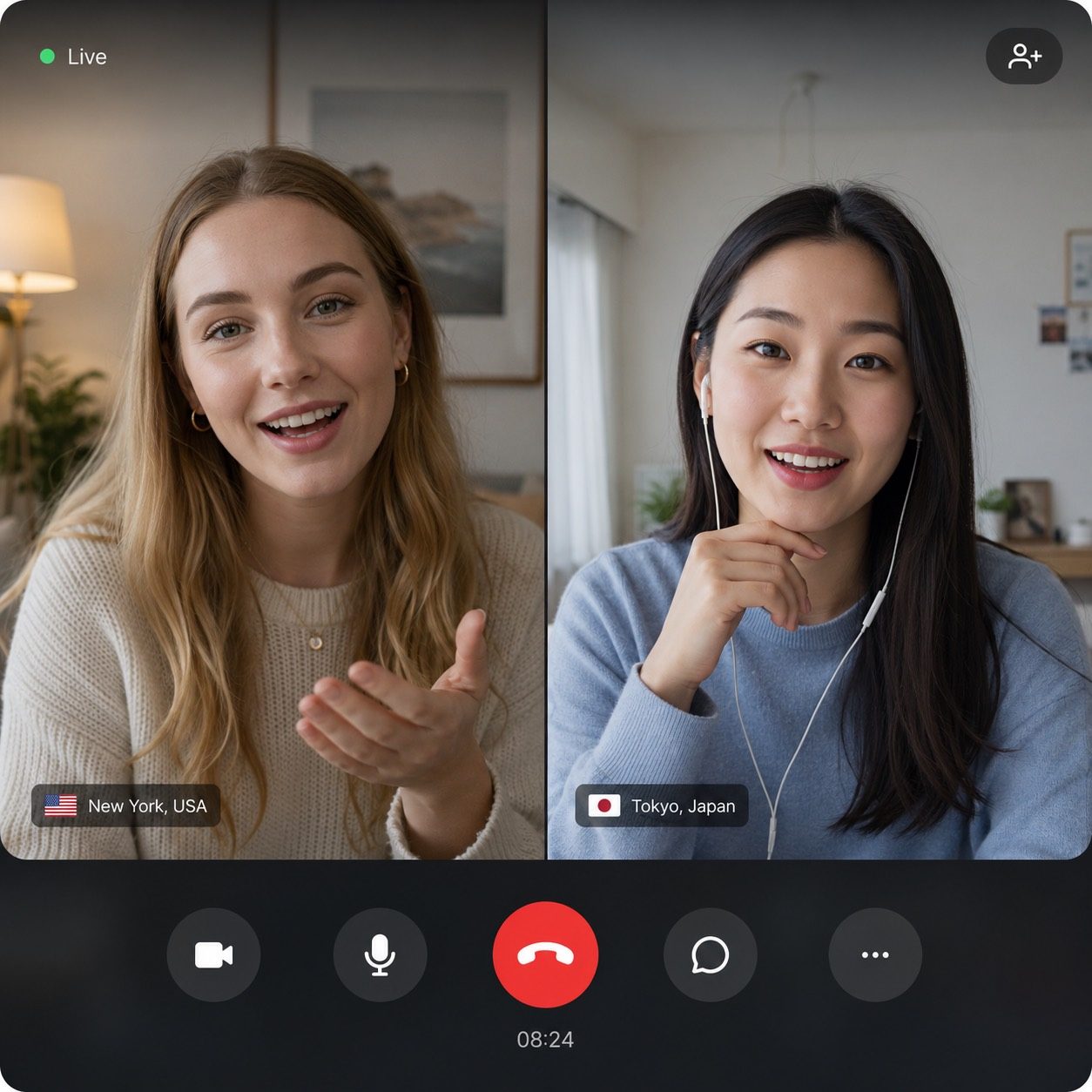
This is where Lingocard differs from every other speaking practice app. When a new word or phrase comes up in a chat or video call, create a flashcard from it in one tap, straight to your cloud storage and into the AI-powered spaced repetition system, scheduled for review at exactly the moments you'd start to forget it.
A word in chat
A native speaker drops a phrase you don't know mid-conversation. Tap it.
One-tap flashcard
The card is created instantly with the word and its context. No copy-pasting, no leaving the chat.
Cloud & spaced review
It syncs across web, iOS, and Android and resurfaces for review right when you need it.
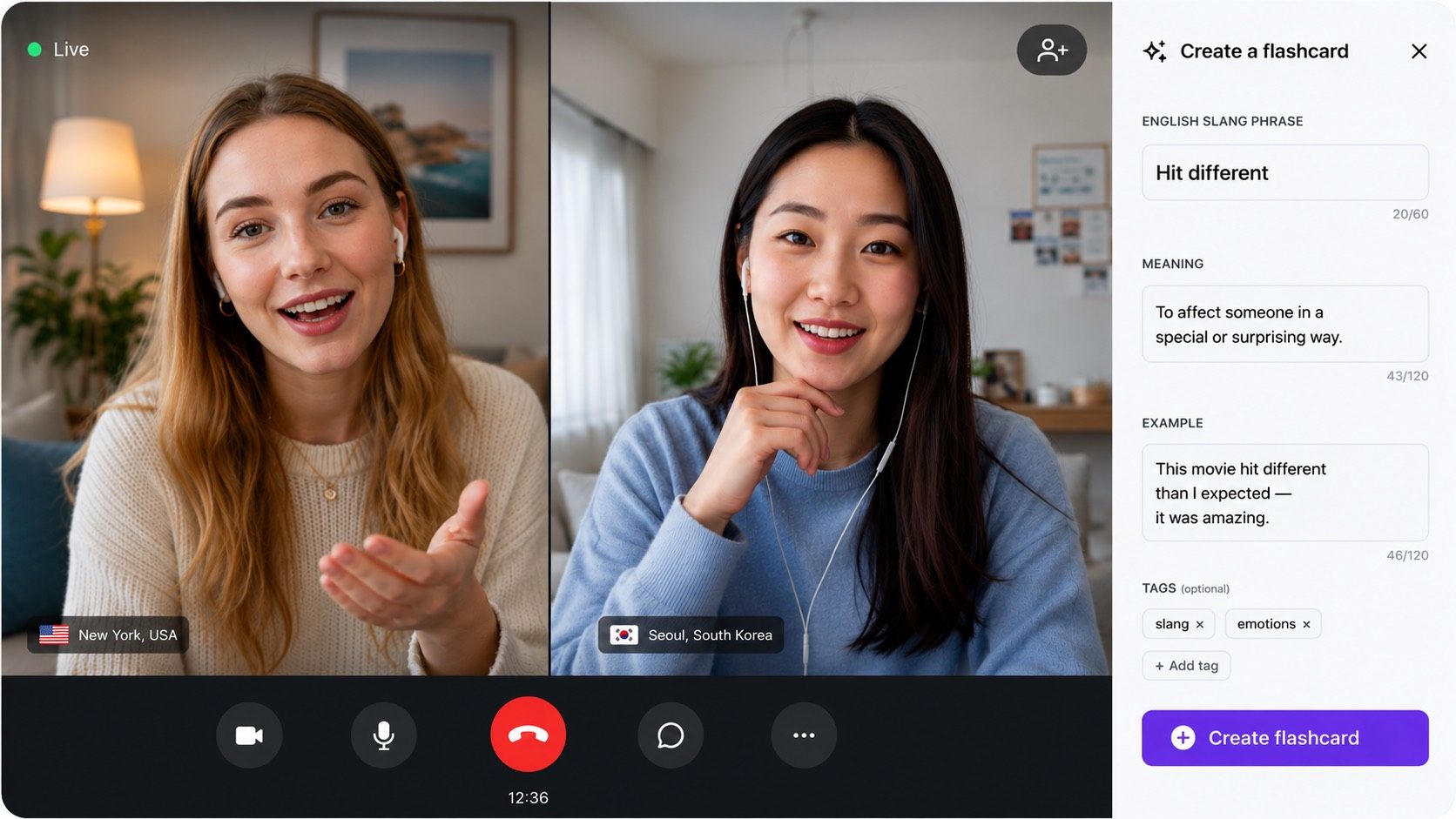
Other apps let conversations evaporate. On Lingocard, every conversation permanently grows your vocabulary - talk today, review tomorrow, and watch words you heard from a real person become words you use yourself.

Learn a language, make friends
Find friends, not just practice partners
Lingocard's motto is "Learn a language, make friends", and the order matters less than you'd think. Because matching is based on shared interests as well as language goals, conversations naturally outlive the exercise. Learners who meet to practice end up gaming together, exchanging travel tips, celebrating each other's exam results, and visiting each other's countries.
That friendship is also what keeps you practicing. The hardest part of language learning is consistency, and nothing builds consistency like a friend on the other side of the world who's expecting your call.
The honest comparison
Why practicing with real people beats apps and AI chatbots
Subscription apps, gamified exercises, and AI bots are useful for memorizing basics (Lingocard has its own flashcard and spaced repetition tools for exactly that), but they can't, on their own, teach you to hold a spontaneous, real-world conversation.
Real human nuance
Scripted audio and AI voices can't teach you to interrupt politely, react to a joke, handle a fast talker, or follow a regional accent. Real partners train your brain for the unpredictability of real conversation.
Active recall, not passive tapping
Choosing a multiple-choice answer uses passive recognition. Speaking forces active recall, constructing sentences in real time. Research on language output consistently shows producing the language is what builds fluency.
Free interaction
Many popular exchange apps cap your messages, lock search filters, or put video calls behind a paywall. On Lingocard, the core features (partner search, text chat, and video chat) are free.
| Feature | Lingocard | Tutor marketplaces | AI chatbot apps | Classic tandem apps |
|---|---|---|---|---|
| Price of speaking practice | Free | $10-40+/hour | Subscription | Free with paywalled limits |
| Real human conversation | Yes | Yes | No | Yes |
| Partners learning the same language | Yes | No | No | Rarely |
| Native speakers | Yes - free exchange | Yes - paid | No | Yes |
| Matching by interests and hobbies | Yes | No | No | Limited |
| Flashcards created from conversations | Yes - cloud + SRS | No | No | No |
| Languages | 67 | Varies | 20-30 | 30-50 |
← Swipe to compare all four →
67 languages
Practice speaking 67 languages
Wherever your target language sits on the popularity curve, there's a community for it, from English, Spanish, and Chinese to Yoruba, Sinhala, Kazakh, and Haitian. Because partners come from every continent, you pick up the slang, culture, and accents that make you sound like a person, not a phrasebook.
Loved by learners
Real conversations, real progress
I started with text chat because a live call felt scary. Three weeks later I'm doing 40-minute video calls in Spanish, with someone who's now a real friend.
The flashcard-from-chat feature is genius. Every word my Tokyo exchange partner teaches me is waiting on my phone the next morning.
I practice French with another learner from Brazil. Neither of us is native, so there's zero pressure. We just talk, mess up, and laugh about it.
I came for German practice and left with three friends across two continents. We still call every week. It's the only routine I've never skipped.
Best choice for your travel. Learning a new language with an app always comes handy. I do it mostly to communicate with anyone when I travel abroad.
Frequently asked questions
Is speaking practice on Lingocard really free?
Do I practice with native speakers or with other learners?
How do I find a speaking partner?
Can I practice as a complete beginner?
Is video chat free?
Can I really make friends on Lingocard?
Can I save new words from a conversation?
How is Lingocard different from a language tutor?
How is it different from AI chatbot apps?
Is it safe to talk to people I don't know?
Can I practice more than one language at a time?
Which languages and devices does Lingocard support?
Start your free speaking practice today
Your best speaking partners are already online, learners who share your goals and native speakers ready to help. Create your free profile, let the search engine find your matches, and have your first real conversation today.
Further reading
Learn more on the blog
How to find native speakers to practice with - a practical guide to meeting language partners and getting your first conversations going.
How to find native speakers