
Learn German online.
Free German speaking practice.
Build your German vocabulary with smart flashcards and make friends across the globe to practice with.
German for free
How do I learn German online?
To learn German online, start with the words you will actually meet: the 100 most common German words. Lock them in with spaced repetition, which brings each word back just before you forget it, and practice speaking with real people. For English speakers the FSI puts working fluency near 900 class hours, so daily sessions beat rare long ones.
Why learn German?
German is spoken by around 130 million people and is the most widely spoken native language in the European Union. It shares Germanic roots with English, so many everyday words feel familiar, and its consistent spelling means words are pronounced as they are written.
German is written in the Latin script. In the US Foreign Service Institute ranking, German is a Category II language - about 900 class hours to professional working proficiency for English speakers. German belongs to the Indo-European (Germanic) family - if you enjoy it, a natural next step is Dutch, Swedish or English.
The 50 most common German words
Start with the words you will actually meet: learn these and you will recognize something in almost every German sentence.
| # | Word | Pronunciation | Meaning |
|---|---|---|---|
| 1 | der | dair | the (definite article) |
| 2 | und | oont | and |
| 3 | sein | zine | be |
| 4 | in | in | in |
| 5 | ein | ine | one |
| 6 | zu | tsoo | to |
| 7 | haben | HAH-ben | have |
| 8 | ich | ikh | I |
| 9 | werden | VAIR-den | become |
| 10 | sie | zee | they |
| 11 | von | fon | from |
| 12 | nicht | nikht | not (negation) |
| 13 | mit | mit | with |
| 14 | es | es | it |
| 15 | sich | zikh | self |
| 16 | auch | owkh | also |
| 17 | auf | owf | on |
| 18 | für | fewr | for |
| 19 | an | ahn | at, on (touching, next to) |
| 20 | er | air | he |
| 21 | so | zoh | so |
| 22 | dass | dahs | that (conjunction) |
| 23 | können | KURN-en | can |
| 24 | dies | dees | this |
| 25 | als | ahls | than |
| 26 | ihr | eer | their |
| 27 | wie | vee | how |
| 28 | bei | by | near |
| 29 | oder | OH-der | or |
| 30 | wir | veer | we |
| 31 | aber | AH-ber | but |
| 32 | dann | dahn | then |
| 33 | man | mahn | one, you (impersonal) |
| 34 | da | dah | there |
| 35 | mein | mine | my |
| 36 | du | doo | you |
| 37 | nach | nahkh | after |
| 38 | wenn | ven | when |
| 39 | also | AHL-zoh | therefore |
| 40 | aus | ows | out |
| 41 | noch | nokh | still |
| 42 | um | oom | around |
| 43 | Jahr | yar | year |
| 44 | machen | MAHKH-en | do |
| 45 | nur | noor | only |
| 46 | über | EW-ber | about |
| 47 | sehen | ZAY-en | see |
| 48 | gehen | GAY-en | go |
| 49 | sagen | ZAH-gen | say |
| 50 | Zeit | tsite | time |
Useful phrases in German
- Hallo · HAH-loh · Hello / Good day
- Wie geht's? · vee GAYTS · How are you?
- Danke · DAHN-keh · Thank you
- Bitte · BIT-teh · Please
- Ich heiße... · ikh HY-seh · My name is...
- Wo ist...? · voh ist · Where is...?
- Auf Wiedersehen · owf VEE-der-zayn · Goodbye
- Entschuldigung · ent-SHOOL-dee-goong · Excuse me
- Ich verstehe nicht · ikh fer-SHTAY-uh nikht · I don't understand
- Können Sie mir helfen? · KER-nen zee meer HEL-fen · Can you help me?
- Wie viel kostet das? · vee feel KOS-tet dahs · How much is it?
- Bis morgen! · biss MOR-gen · See you tomorrow!
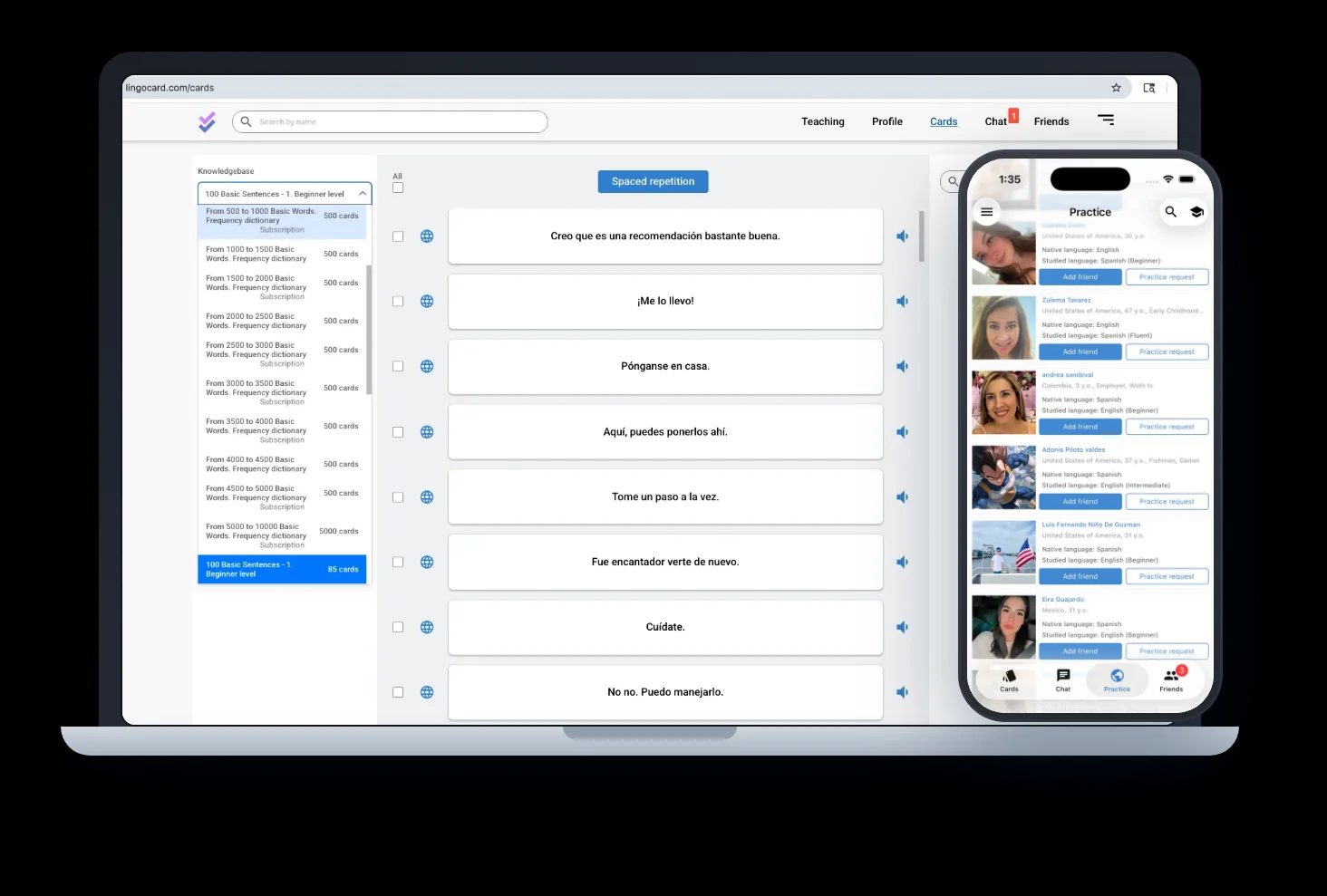
Learn German with comprehensive language resources
- Pronunciation
- Numbers
- Verbs and adjectives
- Frequency dictionaries
- Basic sentences
- Thematic dictionaries
- Politeness
- Idioms
Learn German, wherever you are
- AI-powered spaced repetition learning system on the go
- Audio processing for pronunciation
- Creation of visual language flash cards with images
- Search for speaking practice partners
- Frequency and thematic dictionaries for any language
- Alert system with exercise reminders
- Live video and messaging to facilitate learning
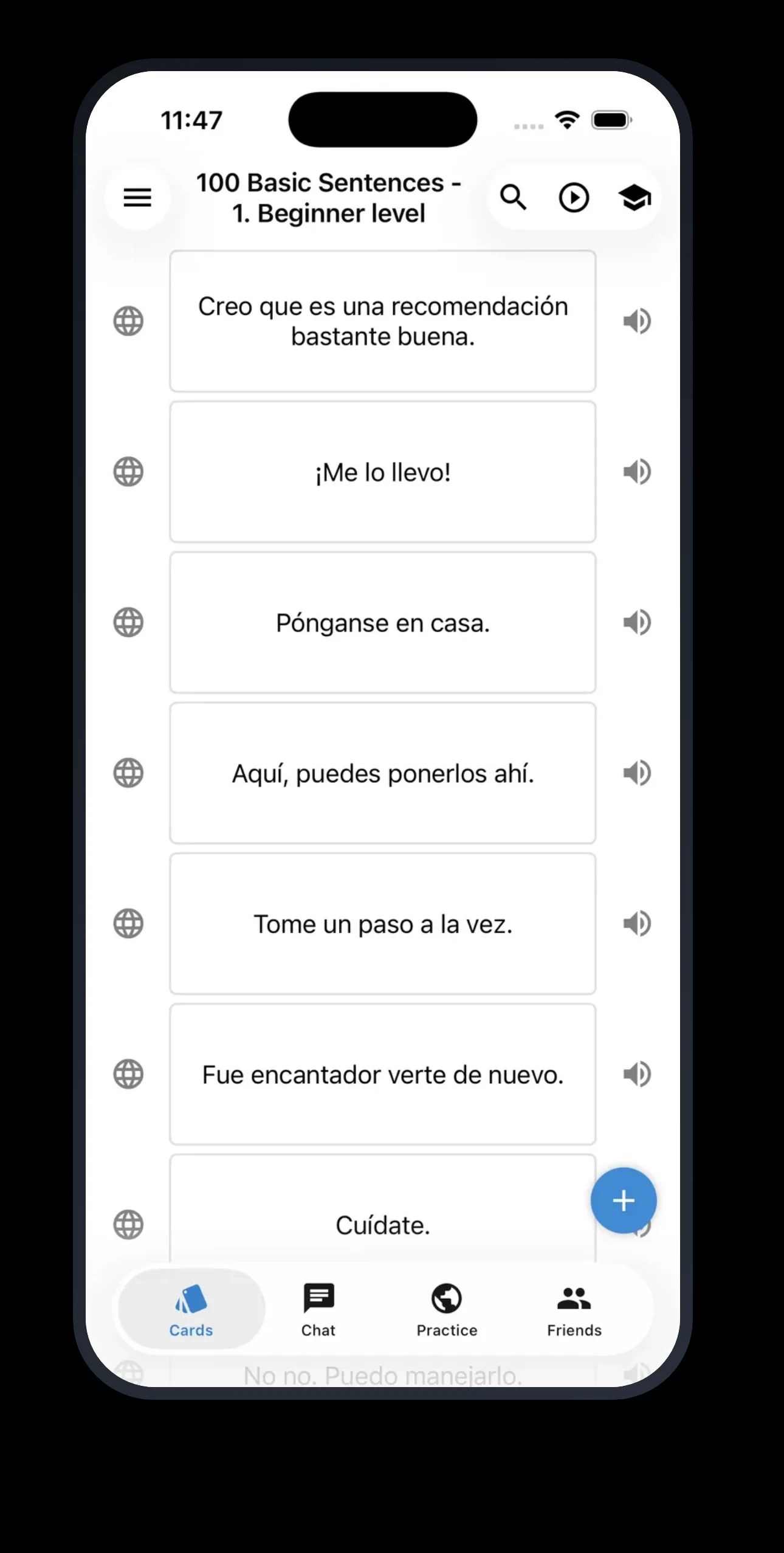
Join our global German learning community
Collaborate with native German speakers and fellow learners: exchange messages, correct each other's cards, and practice real conversation.
Send friend requests to the speakers you click with and build your own friends list - many practice partners become real friends.









Are you an educator? Teach German online · Create an online German school · Build a German curriculum