
Learn Arabic online.
Free Arabic speaking practice.
Build your Arabic vocabulary with smart flashcards and make friends across the globe to practice with.
Arabic for free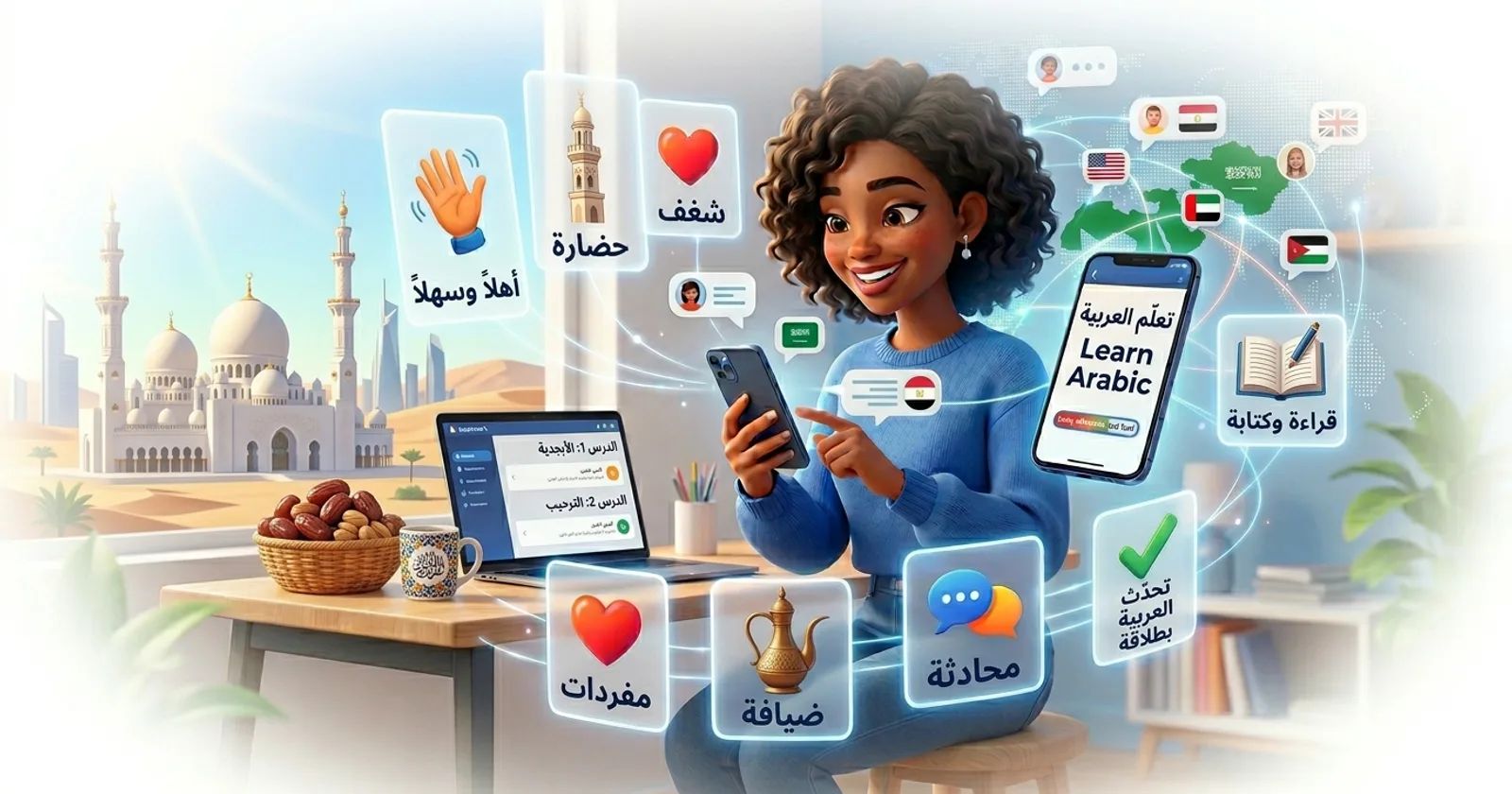
How do I learn Arabic online?
To learn Arabic online, start with the words you will actually meet: the 100 most common Arabic words. Lock them in with spaced repetition, which brings each word back just before you forget it, and practice speaking with real people. For English speakers the FSI puts working fluency near 2200 class hours, so daily sessions beat rare long ones.
Why learn Arabic?
Arabic is spoken by over 400 million people across the Middle East and North Africa and is one of the six official UN languages. It is written from right to left in its own elegant script, and Modern Standard Arabic is understood across the entire Arab world.
In the US Foreign Service Institute ranking, Arabic is a Category IV language - about 2200 class hours to professional working proficiency for English speakers. Arabic belongs to the Afro-Asiatic (Semitic) family - if you enjoy it, a natural next step is Hebrew or Amharic.
The 50 most common Arabic words
Start with the words you will actually meet: learn these and you will recognize something in almost every Arabic sentence.
| # | Word | Pronunciation | Meaning |
|---|---|---|---|
| 1 | في | fee | in |
| 2 | من | min | from |
| 3 | على | ah-LAH | on |
| 4 | أن | ahn | that (conjunction) |
| 5 | إلى | ee-LAH | to |
| 6 | كان | KAH-nah | be |
| 7 | هذا | HAH-dhah | this |
| 8 | لا | lah | no |
| 9 | ما | mah | what |
| 10 | مع | MAH-ah | with |
| 11 | عن | ahn | about |
| 12 | هو | HOO-wah | he |
| 13 | كل | kool | each |
| 14 | الذي | al-lah-DHEE | that / which (relative) |
| 15 | قال | KAH-lah | say |
| 16 | بعد | BAH-ahd | after |
| 17 | بين | bayn | between |
| 18 | يوم | yowm | day |
| 19 | قد | kahd | (completed-action particle) |
| 20 | لم | lam | not (negation) |
| 21 | هي | HEE-yah | she |
| 22 | إذا | ee-DHAH | if |
| 23 | نحن | NAH-noo | we |
| 24 | أنا | AH-nah | I |
| 25 | عند | IN-dah | at |
| 26 | لكن | LAH-kin | but |
| 27 | أو | aw | or |
| 28 | غير | ghayr | other than |
| 29 | حتى | HAT-tah | until |
| 30 | إن | in | indeed (emphatic particle) |
| 31 | عام | ahm | year (formal) |
| 32 | أول | AW-wal | first |
| 33 | كبير | kah-BEER | large |
| 34 | وقت | wahkt | time |
| 35 | جديد | jah-DEED | new |
| 36 | عمل | AH-mahl | work |
| 37 | قبل | KAHB-lah | before |
| 38 | جيد | JAY-yid | good |
| 39 | آخر | AH-khar | other |
| 40 | كثير | kah-THEER | many |
| 41 | أيضا | AY-dahn | also |
| 42 | هناك | hoo-NAHK | there |
| 43 | منذ | MOON-dhoo | since |
| 44 | حيث | HAY-thoo | where |
| 45 | نفس | nahfs | self |
| 46 | شيء | shay | thing |
| 47 | حياة | hah-YAH | life |
| 48 | إنسان | in-SAHN | person |
| 49 | عرف | AH-rah-fah | know |
| 50 | أراد | ah-RAH-dah | want |
Useful phrases in Arabic
- مرحبا · MAR-ha-ban · Hello / Good day
- كيف حالك؟ · KAY-fa HAA-luk · How are you?
- شكرا · SHUK-ran · Thank you
- من فضلك · min FAD-lik · Please
- اسمي... · IS-mee · My name is...
- أين...؟ · AY-na · Where is...?
- مع السلامة · MAH-ah sah-LAH-mah · Goodbye
- عفوا · AF-wan · Excuse me
- لا أفهم · lah AF-ham · I don't understand
- هل يمكنك مساعدتي؟ · hal YUM-kee-nook moo-sah-ah-dah-TEE · Can you help me?
- بكم هذا؟ · bee-KAM HA-tha · How much is it?
- أراك غدا! · ah-RAHK GHA-dan · See you tomorrow!
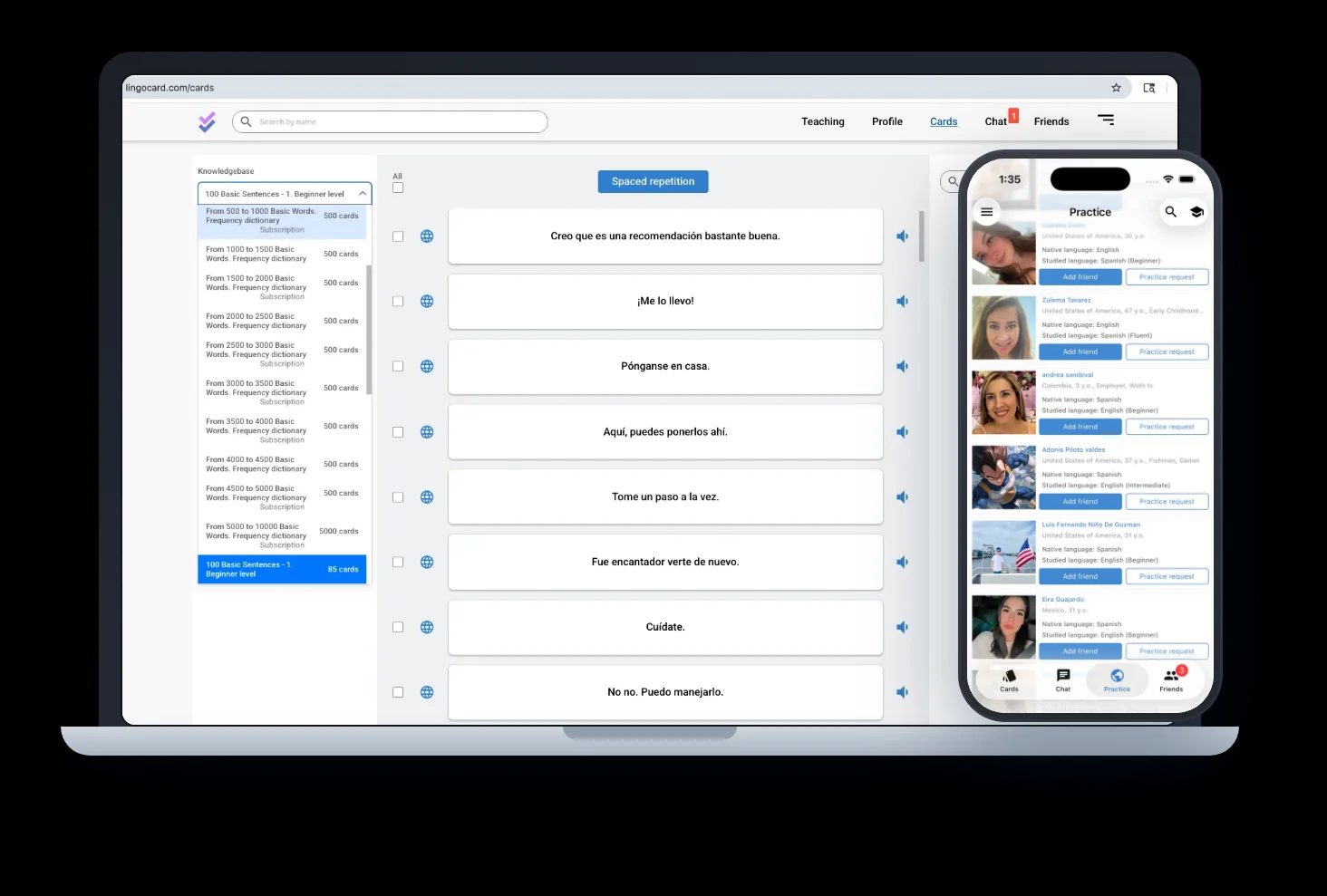
Learn Arabic with comprehensive language resources
- Pronunciation
- Numbers
- Verbs and adjectives
- Frequency dictionaries
- Basic sentences
- Thematic dictionaries
- Politeness
- Idioms
Learn Arabic, wherever you are
- AI-powered spaced repetition learning system on the go
- Audio processing for pronunciation
- Creation of visual language flash cards with images
- Search for speaking practice partners
- Frequency and thematic dictionaries for any language
- Alert system with exercise reminders
- Live video and messaging to facilitate learning
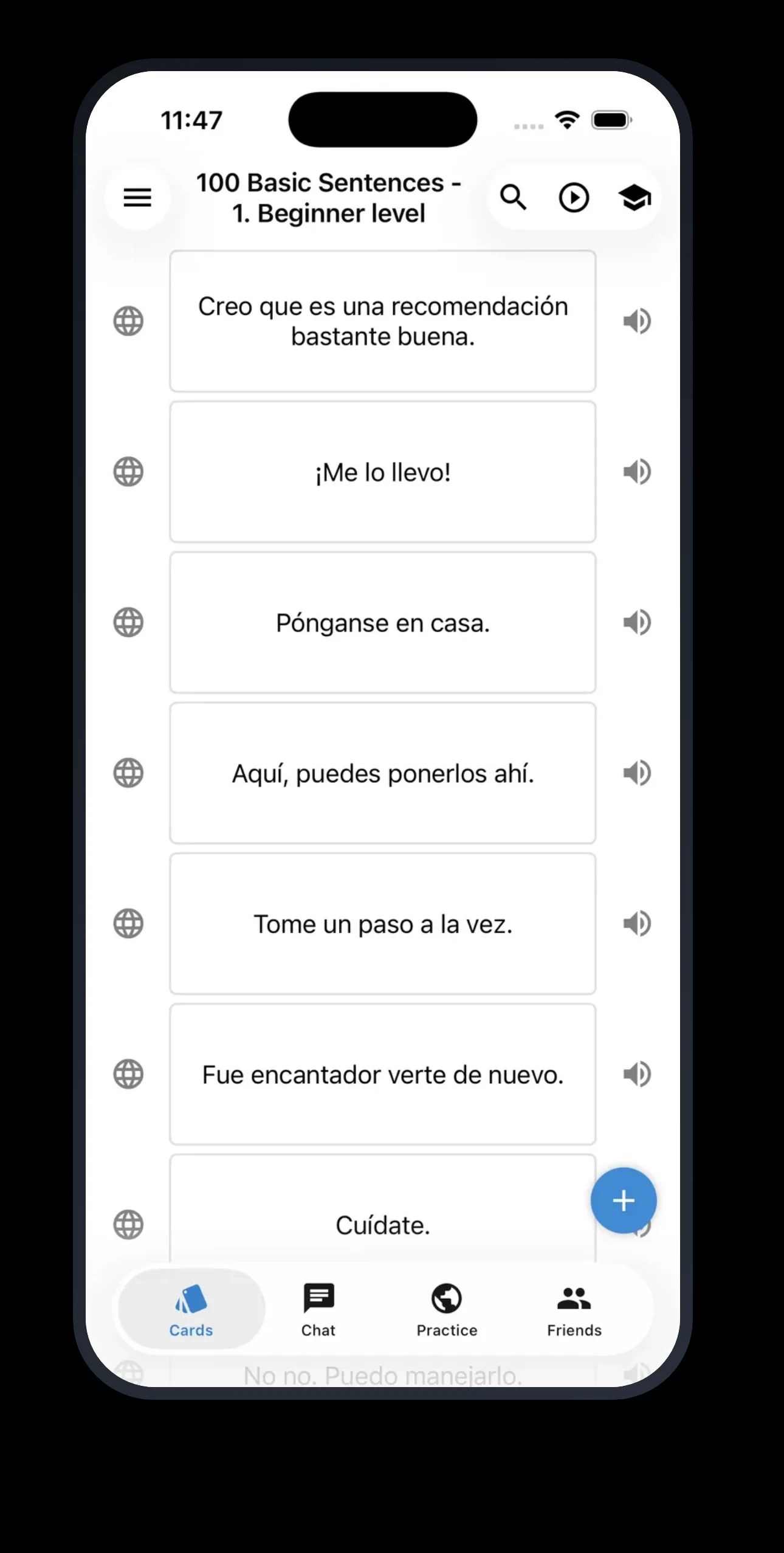
Join our global Arabic learning community
Collaborate with native Arabic speakers and fellow learners: exchange messages, correct each other's cards, and practice real conversation.
Send friend requests to the speakers you click with and build your own friends list - many practice partners become real friends.






Are you an educator? Teach Arabic online · Create an online Arabic school · Build a Arabic curriculum